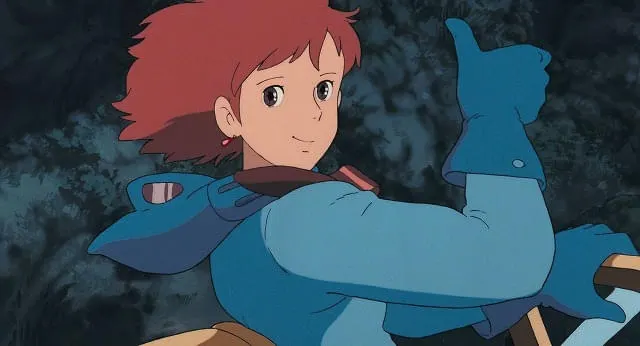
The Studio Ghibli Movie That Technically Isn't
Friday Roadshow, Nippon TV's long-running Friday-night movie showcase, gave Nausicaä of the Valley of the Wind its 21st run on Japanese television on August 14, 2026. To go with the airing, Anime Hack published a retrospective rounding up the film's story, voice cast, and a handful of production stories that still surprise people. Anime Hack is the anime news site run by Japanese film portal Eiga.com, and the column updates a piece the site first ran in July 2023.
The best-known piece of trivia comes first: Nausicaä is not, strictly speaking, a Studio Ghibli production. As the column points out, Ghibli's own official site carries a note on its Nausicaä page stating that production was handled by Topcraft, a studio with a track record in Japan-US co-produced animation. Studio Ghibli was founded afterward, during work on the next film, Castle in the Sky. That timeline is why fans treat Nausicaä as Ghibli's "film zero."
Miyazaki directed the 1984 film from his own manga, which he was serializing in the anime magazine Animage. The story is set 1,000 years after an apocalyptic war called the Seven Days of Fire, in a world overrun by giant insects and a spreading toxic forest. Nausicaä, princess of the small Valley of the Wind, soars over it all on her glider and has an uncanny bond with the enormous, feared Ohmu. Her quiet life ends when her home is pulled into a war between the great powers Torumekia and Dorok.
Sumi Shimamoto's Back-to-Back Miyazaki Heroines
Nausicaä is voiced by Sumi Shimamoto, who had just played Clarisse, the heroine of Miyazaki's feature directing debut, Lupin the Third: The Castle of Cagliostro. She won both roles through auditions. In an interview shortly after Nausicaä opened, Miyazaki singled out her performance in the scene of Nausicaä's childhood dream, calling it truly convincing acting and praising her delivery of the line "Mother is there too!"
Shimamoto stayed in the Miyazaki orbit, later voicing the mother in My Neighbor Totoro and Toki in Princess Mononoke. She is not the only cast member with a Ghibli future, either. Yōji Matsuda, who voices Asbel, the boy Nausicaä meets at the bottom of the toxic forest, went on to play Ashitaka in Princess Mononoke. The cast also includes Yoshiko Sakakibara as the Torumekian commander Kushana, Gorō Naya as the swordmaster Yupa, and Ichirō Nagai as the valley retainer Mito.
How Nausicaä Launched Joe Hisaishi and Hideaki Anno
When production began, Miyazaki gave producer Toshio Suzuki exactly one condition: Isao Takahata had to produce the film. The two had spent years making shows and films as a director-and-animator pair, including Panda! Go, Panda!, Heidi, Girl of the Alps, and 3000 Leagues in Search of Mother.
One of Takahata's jobs as producer was choosing the film's composer. The record company initially floated Haruomi Hosono for the score, but in Suzuki's book Tensai no Shikō (roughly, "How Geniuses Think"), Suzuki recalls Takahata arguing that the hot-blooded Miyazaki needed a composer who wrote hot-blooded music. The alternative candidate was Joe Hisaishi, then an unknown in his 30s. Hisaishi has credited Takahata with discovering and nurturing him, and he went on to score every Miyazaki feature from Nausicaä through The Boy and the Heron, plus Takahata's own final film, The Tale of the Princess Kaguya.
Then there is the God Warrior. The key animation for the creature's late-film rampage was drawn by Hideaki Anno, more than a decade before Evangelion, back when he was a near-amateur animator with no in-betweening experience. Anno had come up from Osaka with little more than a desire to work with Miyazaki, and he slept at the understaffed studio during production. By his own account, drawing people was not his strength, so he handled the God Warrior, tanks, and explosions himself while Miyazaki drew the human characters in his scenes, Kushana included. In the interview book Hideaki Anno: Parano Evangelion, Anno remembered Miyazaki as fired up and clearly enjoying himself during production, and called him "a genius as an animator," citing his speed, ideas, and technique.
Looking Ahead
International fans do not need a Japanese broadcast slot to catch up. GKIDS distributes Nausicaä of the Valley of the Wind in North America, where the film currently streams on HBO Max and Hulu, and Netflix carries it in many regions outside the United States and Japan. The film is also widely available on Blu-ray.
For anyone curious about where the story goes after the credits, Miyazaki's original Nausicaä manga is published in English by Viz Media, including a two-volume hardcover box set. The Anime Hack column itself is Japanese-only, but its bigger revelations, from Topcraft to Anno's God Warrior, make for good trivia all the same.